Natural Oil Nasal Moisturizers for Dry Nose: Which Is Best?
A dry nose can cause itching, burning, crusting, nosebleeds, and discomfort when breathing. Natural oil nasal moisturizers are one option for relieving these symptoms by helping replenish moisture and soothe the delicate lining of the nose. Understanding the different types of oils and choosing a product designed specifically for intranasal use can help you find safe, lasting relief.
Why Does the Nose Become Dry?
The inside of your nose is lined with a delicate mucous membrane that warms, humidifies, and filters the air you breathe. When this protective lining loses moisture, it becomes more prone to irritation, inflammation, and cracking.
Common causes of nasal dryness include dry indoor air, seasonal weather changes, medications, allergies, and frequent use of nasal sprays or decongestants. (Related: What will dry up a runny nose?)
What Is a Natural Oil Nasal Moisturizer?
A natural oil nasal moisturizer is designed to hydrate dry nasal tissues using plant-derived oils known for their moisturizing properties. Compared with petroleum-based products, many natural oils provide lightweight moisture and may leave less of a greasy residue while helping support the skin's moisture barrier.
Some products contain a single oil, while others combine complementary ingredients formulated specifically for intranasal use. These formulations are designed to spread evenly, provide lasting hydration, and support the delicate tissues inside the nose.
What Is a Natural Oil Nasal Moisturizer?
A natural oil nasal moisturizer is designed to hydrate dry nasal tissues using plant-derived oils known for their moisturizing properties. Compared with petroleum-based products, many natural oils provide lightweight moisture and may leave less of a greasy residue while helping support the skin's moisture barrier.
Some products contain a single oil, while others combine complementary ingredients formulated specifically for intranasal use. These formulations are designed to spread evenly, provide lasting hydration, and support the delicate tissues inside the nose.
Grapeseed Oil: A Lightweight Choice for Nasal Moisture
Among natural oils,
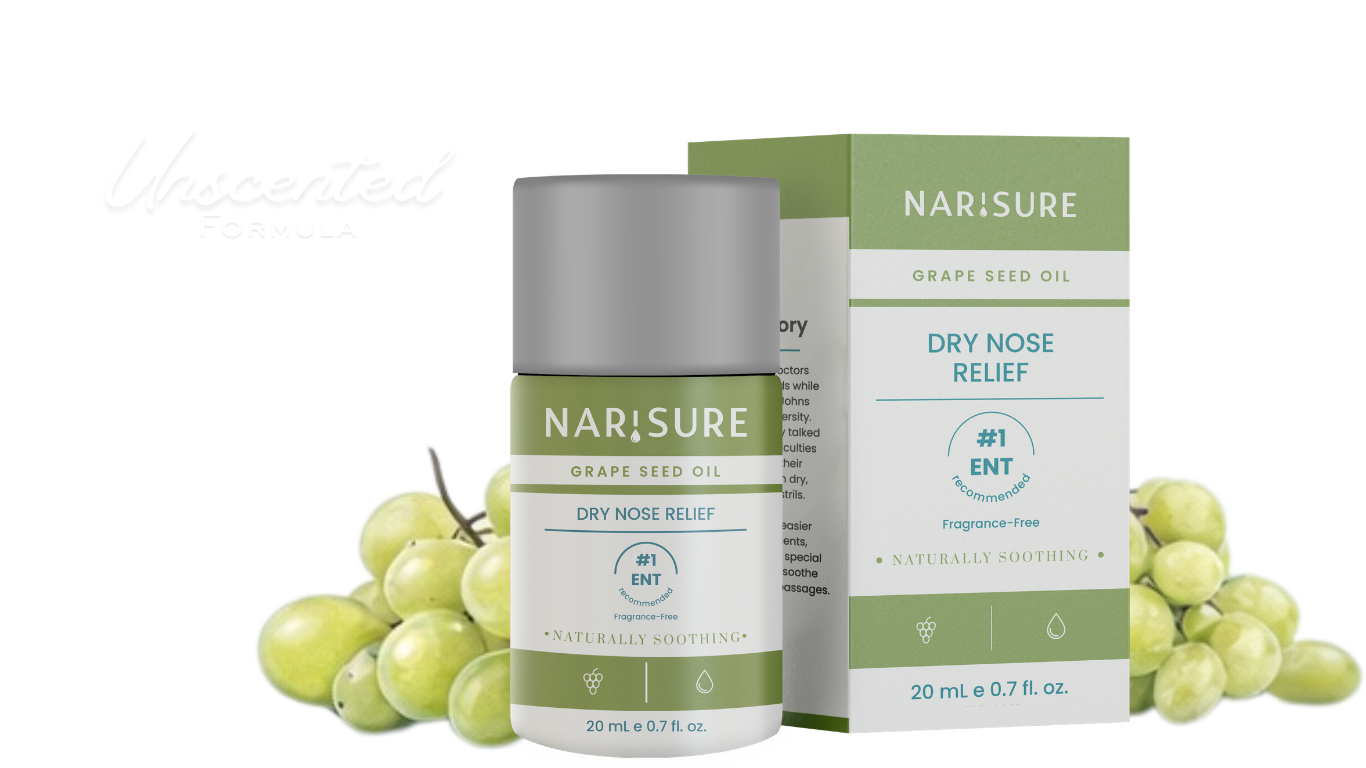
grapeseed oil has become a popular ingredient in nasal moisturizers because of its light texture and skin-friendly composition. Naturally rich in linoleic acid and vitamin E, grapeseed oil is valued for its moisturizing properties and may help support the skin's natural moisture barrier.
Unlike heavier oils, grapeseed oil absorbs quickly and leaves little to no greasy residue. This makes it especially appealing for people who experience recurring nasal dryness and prefer a fast-absorbing moisturizer for everyday use.
Coconut Oil: Rich Moisture with a Heavier Feel
Coconut oil has long been used as a
natural moisturizer because it forms a protective barrier that helps reduce moisture loss. Its rich consistency can provide prolonged hydration, making it a common household remedy for dry or cracked skin.
However, the same thick texture that benefits the skin may feel less comfortable inside the nose. Some individuals find coconut oil leaves a greasy coating. Although coconut oil can help moisturize dry skin, it was not specifically formulated for intranasal use. For ongoing nasal dryness, many healthcare professionals recommend products specifically formulated for intranasal use because they are designed for the delicate nasal lining and are generally easier to apply.
Sesame Oil: Longer-Lasting Hydration
Sesame oil has been used in
traditional wellness practices for centuries and is included in some nasal oil preparations. It may help soothe irritated tissues while providing longer-lasting moisture than lighter oils.
It is often combined with other botanical ingredients in products formulated for nasal care. However, individuals with sesame allergies should avoid products containing sesame oil.
Rose Geranium Oil: A Complementary Botanical
Rose geranium oil is an essential oil derived from the leaves and flowers of Pelargonium graveolens. It is commonly used in skincare for its pleasant botanical aroma.
In nasal moisturizers, rose geranium oil is typically blended with carrier oils such as grapeseed or sesame oil rather than used alone. Because essential oils are highly concentrated, they should only be used in products specifically formulated for intranasal application to help minimize irritation.
Is It Safe to Put Natural Oils Inside the Nose?
While natural oils can help relieve nasal dryness, experts generally recommend using products specifically formulated for intranasal use rather than household oils. Applying large amounts of oil inside the nose over long periods has been associated with a rare condition called exogenous lipoid pneumonia, although the overall risk is considered low. Choosing products designed for nasal application can help provide comfortable moisture while supporting the delicate nasal lining.
Choosing the Right Natural Oil Nasal Moisturizer
The right natural oil nasal moisturizer depends not only on the individual ingredients but also on how those ingredients are combined. Products formulated specifically for intranasal use are designed to spread comfortably across delicate nasal tissues while providing lasting hydration.
For example, some nasal moisturizers combine lightweight carrier oils, such as grapeseed oil, with botanical ingredients like
rose geranium oil and antioxidants such as vitamin E. Others use sesame oil as the primary moisturizing ingredient to provide longer-lasting hydration. Rather than relying on a single ingredient, these formulations are designed to balance moisture, comfort, and ease of application while emphasizing gentle, well-balanced ingredients.
When comparing products, look for formulations made specifically for nasal application instead of using household oils alone. A well-designed nasal moisturizer should help support the nose's natural moisture barrier while feeling comfortable enough for regular use. If you experience recurring dryness from seasonal weather, CPAP therapy, medications, air travel, or low indoor humidity, choosing a product formulated for intranasal use may provide more consistent relief.
The Bottom Line
Natural oil nasal moisturizers can provide effective relief for dry, irritated nasal passages. Lightweight oils, such as grapeseed oil, offer comfortable hydration, while richer oils, like sesame oil, may provide longer-lasting moisture for some individuals.
Rather than focusing on a single ingredient, consider the overall formulation. Choosing a product designed specifically for intranasal use can help support the nose's natural moisture barrier while providing comfortable, consistent relief from nasal dryness.