Can Grapeseed Oil Nasal Moisturizers Help Dry Nasal Passages?
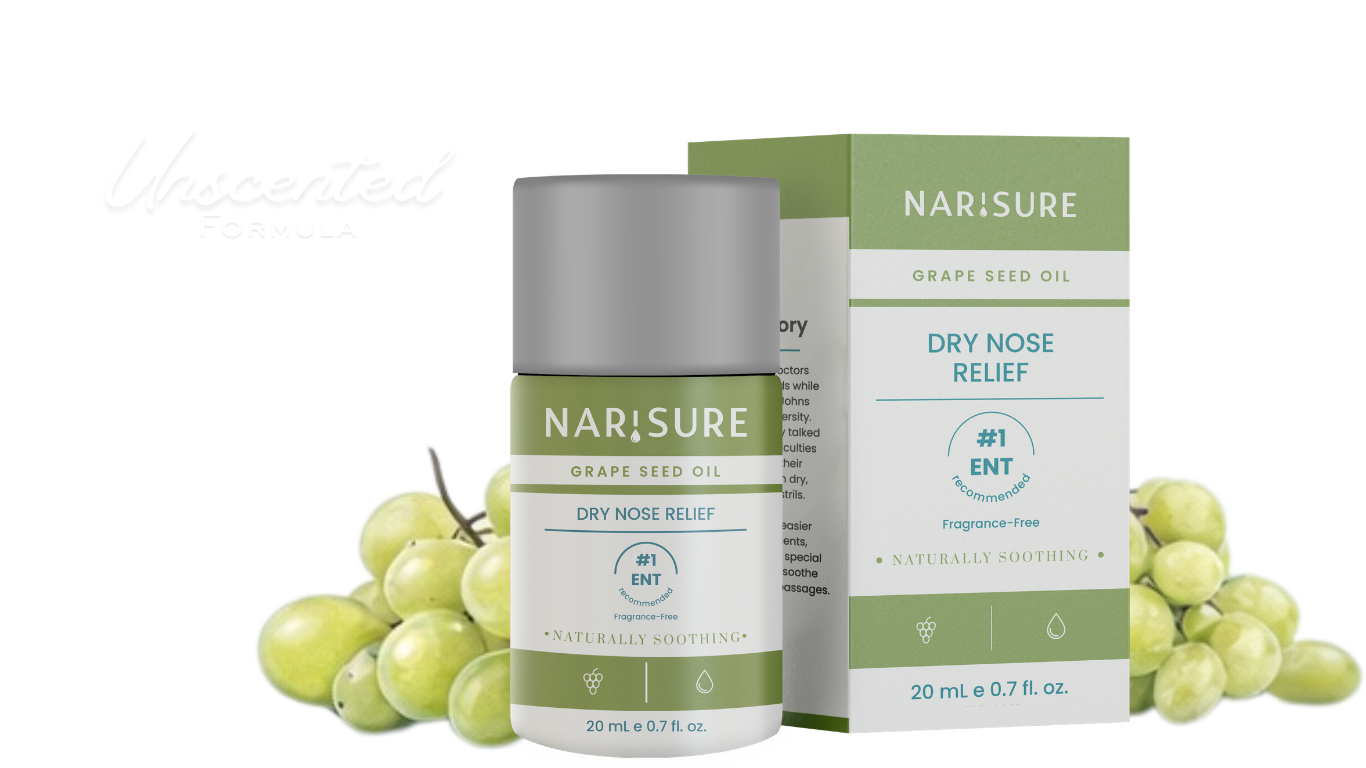
Narisure is a brand of grapeseed oil nasal moisturizer. This article explores the science behind products like it.
Dry nasal passages can cause irritation, crusting, congestion, nosebleeds, and even disrupted sleep. Many people use saline sprays for relief, but some continue to experience persistent dryness despite regular use.
Because of this, oil-based nasal moisturizers, including products made with grapeseed oil, have gained attention as another option for moisturizing dry nasal passages.
But what exactly does grapeseed oil do in a nasal moisturizer, and can it help with dry nose symptoms?
What Causes a Dry Nose?
The inside of your nose is lined with soft tissue called the nasal mucosa. This tissue helps warm, filter, and humidify the air you breathe while trapping dust, bacteria, and viruses before they reach your lungs.
However, the nasal lining can become dry and irritated from:
- Air conditioning or indoor heating
- Dry climates or winter weather
- CPAP machine use
- Allergies or sinus conditions
- Certain medications
- Frequent use of nasal sprays
When the nasal lining dries out, it can crack and become inflamed, leading to discomfort, crusting, and nosebleeds.
Why Saline Spray Alone May Not Be Enough
Saline nasal sprays can help temporarily moisturize dry nasal passages by adding moisture to the nasal lining. However, for some people, the relief may not last long, especially in dry environments or when nasal irritation is ongoing.
In more persistent cases of dryness, the nasal lining may need additional support to help maintain its natural protective barrier. For this reason, some nasal moisturizers include lightweight oils such as grapeseed oil to help support moisture retention.
Unlike thick ointments that can feel heavy or greasy, certain oil-based nasal moisturizers are formulated to spread lightly across the nasal tissue without interfering with normal breathing. While saline sprays primarily add temporary moisture, oil-based moisturizers may also help reduce moisture loss from the nasal lining, helping support longer-lasting comfort for some individuals with chronic dryness.
What Is Grapeseed Oil?
Grapeseed oil comes from the seeds of grapes, most commonly Vitis vinifera. It is commonly used in skincare and medical products because it is lightweight and rich in fatty acids, including linoleic acid.
In nasal moisturizers, grapeseed oil is primarily used to help hydrate and protect dry nasal tissue. Learn more about the benefits of grapeseed oil nasal moisturizers and how they may help support dry nasal passages.
Who May Benefit from Oil-Based Nasal Moisturizer?
Oil-based nasal moisturizers may be helpful for people who experience chronic nasal dryness, frequent nosebleeds caused by dryness, or nasal irritation related to CPAP use. They may also provide additional comfort for individuals affected by dry indoor air from heating or air conditioning, as well as those whose symptoms are not fully relieved by saline spray alone. Products formulated specifically for nasal use are designed to be sterile, gentle, and appropriate for sensitive nasal tissue.
Are Grapeseed Oil Nasal Moisturizers Safe?
Yes, grapeseed oil nasal moisturizers are generally considered safe when formulated specifically for nasal use and used as directed. High-quality nasal moisturizers are formulated to be gentle on sensitive nasal passages and help support hydration and comfort. Narisure is formulated specifically for this purpose.
People with persistent nasal symptoms, allergies, or underlying medical conditions should consult a healthcare provider before starting any new nasal product.
Frequently Asked Questions on Grapeseed Oil Nasal Moisturizers
Can I put grapeseed oil directly in my nose?
No. Cooking oils and cosmetic oils are not sterile and may contain impurities. Only use products specifically formulated for nasal use.
Is grapeseed oil better than saline spray?
Not necessarily. Saline sprays are still the most common first-line treatment for nasal dryness. Oil-based sprays may provide additional moisture for people with more persistent symptoms.
Is grapeseed oil safe for children?
Generally, nasal moisturizers are safe, but you should consult a pediatrician before using any medicated or oil-based moisturizer in children under 12.
*Disclaimer: This information is for educational purposes based on available research and patent literature. It does not constitute medical advice. Always speak with a healthcare provider for diagnosis and treatment*