Is a Dry, Crusty Nose a Sign of an Infection? Causes, Symptoms, and Relief
A dry, crusty nose can be uncomfortable. You may notice hardened mucus, flaky skin just inside your nostrils, itching, or even a little blood when wiping or blowing your nose. While these symptoms can sometimes occur with an infection, dryness and crusting alone do not necessarily mean you have one.
In many cases, nasal dryness is caused by low humidity, allergies, frequent nose blowing, certain medications, or irritation of the delicate nasal lining. However, when crusting occurs alongside pain, swelling, redness, or sores, an infection such as nasal vestibulitis may be responsible.
Understanding the possible causes can help you find appropriate dry nose relief and recognize when to seek medical attention.
Can a Dry, Crusty Nose Be a Sign of an Infection?
Yes, but dryness and crusting alone don’t necessarily mean infection.
One possible cause is nasal vestibulitis, a bacterial infection of the skin just inside the nostrils. It can develop when bacteria enter small breaks in the skin caused by nose picking, forceful nose blowing, or repeated irritation.
Signs may include redness, swelling, tenderness, and painful sores. If you notice these symptoms, consult an ear, nose and throat specialist. Bacterial infections may require prescription treatment, not just a nasal moisturizer.
What Causes a Dry, Crusty Nose Besides Infection?
Not every dry or crusty nose is caused by bacteria. Several everyday factors can affect the moisture balance of your nasal passages.
1. Dry Air and Low Humidity
Cold weather, indoor heating, air conditioning, and naturally low humidity can dry out the nasal lining. When the tissues lose moisture, mucus can become thicker and harder, eventually forming crusts.
This is particularly common in environments where indoor air is consistently dry or when heating and air conditioning are used frequently.
2. Allergies and Frequent Nose Blowing
Allergies can cause sneezing, itching, congestion, and a runny nose. Repeatedly wiping or blowing your nose can irritate the surrounding skin and delicate nasal tissues. Even when the original allergy symptoms improve, dryness and irritation may remain.
3. Certain Medications
Some antihistamines and decongestants can contribute to dryness by reducing nasal secretions. Certain nasal sprays may also cause irritation or dryness, particularly when used incorrectly or more frequently than directed. If you suspect that a medication is contributing to nasal dryness, consult your healthcare professional before changing or stopping it.
4. Dehydration and Mouth Breathing
Not drinking enough fluids can contribute to overall dehydration. Nasal congestion may also make you breathe through your mouth more frequently, changing your normal breathing pattern and contributing to discomfort. Maintaining adequate hydration supports general health, although drinking more water alone may not resolve nasal dryness caused by environmental conditions or local irritation.
5. Excessive Cleaning or Nose Picking
Removing hardened mucus by picking or forcefully cleaning the nostrils can create tiny breaks in the nasal lining. This can lead to irritation, minor bleeding, and additional crusting. Repeated trauma may also increase the risk of developing nasal vestibulitis by allowing bacteria to enter damaged skin.
How Can You Tell the Difference Between Nasal Dryness and an Infection?
Although the symptoms can overlap, a few differences may help you recognize whether you are dealing with ordinary nasal dryness or a possible infection.
Nasal dryness typically causes a feeling of tightness, itching, flaking, and hardened mucus inside the nostrils. You may also notice minor bleeding when the delicate nasal lining becomes cracked or irritated. These symptoms are often associated with dry indoor air, allergies, or frequent nose blowing.
A nasal infection, on the other hand, may cause more noticeable inflammation. You might experience persistent tenderness, redness, swelling, painful sores, pimples near the nostril opening, or yellowish crusting.
While these symptoms can offer clues, they are not definitive. If you experience persistent pain, swelling, sores, or worsening symptoms, consult an ear, nose and throat specialist for proper evaluation.
How Can You Get Dry Nose Relief at Home?
If your symptoms are related to dryness rather than infection, a few simple changes may help restore comfort and protect the delicate nasal lining.
Use a nasal moisturizer. A nasal moisturizer can help soothe and protect dry or irritated nasal passages. Unlike products intended to treat congestion, a moisturizer is designed to support moisture and comfort. Choose a product specifically formulated for nasal use and follow its directions.
Try saline nasal spray or drops. Saline products can help loosen dried mucus and add moisture to the nasal passages. They may be useful when dryness is accompanied by thick or hardened mucus.
Maintain indoor humidity. A clean humidifier can help add moisture to indoor air, particularly when heating or air conditioning contributes to dryness. Follow the manufacturer's cleaning instructions to prevent mold and bacterial growth.
Avoid picking or forcefully removing crusts. Pulling off hardened mucus can damage delicate tissues and cause bleeding. Allow moisture to soften the crusts before gently clearing your nose.
Stay hydrated. Drinking enough water throughout the day supports normal hydration and may help prevent mucus from becoming excessively thick.
Can a Nasal Moisturizer Help With a Dry, Crusty Nose?
Yes. If nasal crusting is caused by dryness, a nasal moisturizer may help soften hardened mucus, soothe irritation, and improve comfort by supporting moisture in the nasal passages.
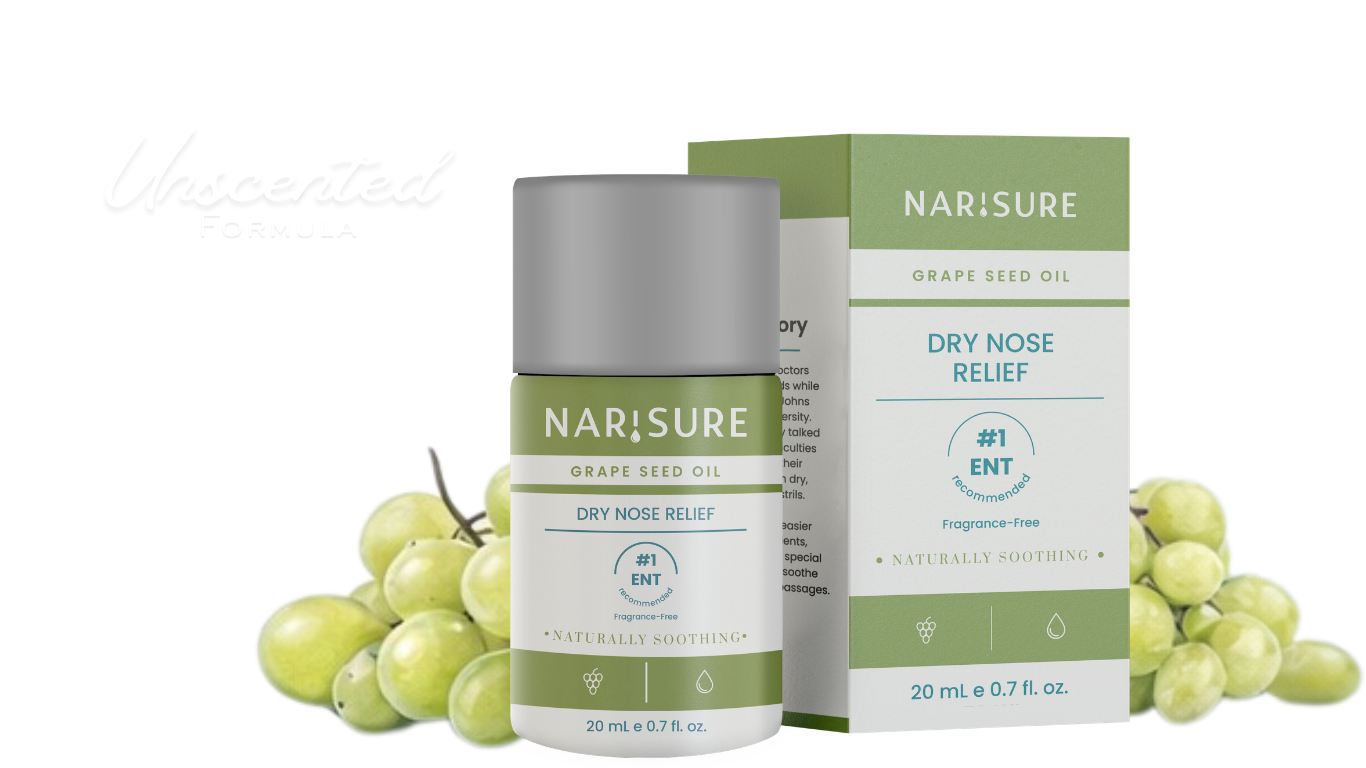
Narisure™ Dry Nose Relief offers nasal moisturizing options designed for people experiencing dryness, itching, and irritation. Its formulas include an oil-based option featuring rose geranium oil, sesame oil, and vitamin E, as well as a fragrance-free formula featuring grapeseed oil for sensitive noses.
When choosing a nasal moisturizer, consider its intended use, formulation, ingredient sensitivities, and product-specific safety instructions. Oil-based nasal products should only be used as directed and should not be assumed to be risk-free simply because their ingredients are naturally derived.
Frequently Asked Questions About a Dry, Crusty Nose
Does a dry nose mean I have a bacterial infection?
No. A dry nose is more commonly associated with low humidity, allergies, irritation, or frequent nose blowing. However, painful crusts, swelling, redness, and sores may indicate a bacterial infection such as nasal vestibulitis.
Why do I have crusty mucus inside my nose every morning?
Overnight exposure to dry indoor air, reduced humidity, and normal mucus buildup can cause mucus to become thick and crusty. Using a clean humidifier and a nasal moisturizer formulated for nasal use may help improve comfort.
What is the best way to moisturize a dry nose?
Options include saline sprays or drops, saline gels, and nasal moisturizers specifically formulated for intranasal use. Maintaining indoor humidity and avoiding excessive nose picking can also help.
Medical Disclaimer:
This article is intended for general informational purposes only and should not be considered a substitute for professional medical advice, diagnosis, or treatment. Consult a qualified healthcare professional if you have persistent, worsening, or concerning nasal symptoms.